Ontario Bike Paths: Paved Multi-Use Trails
What We Mean by Bike Path
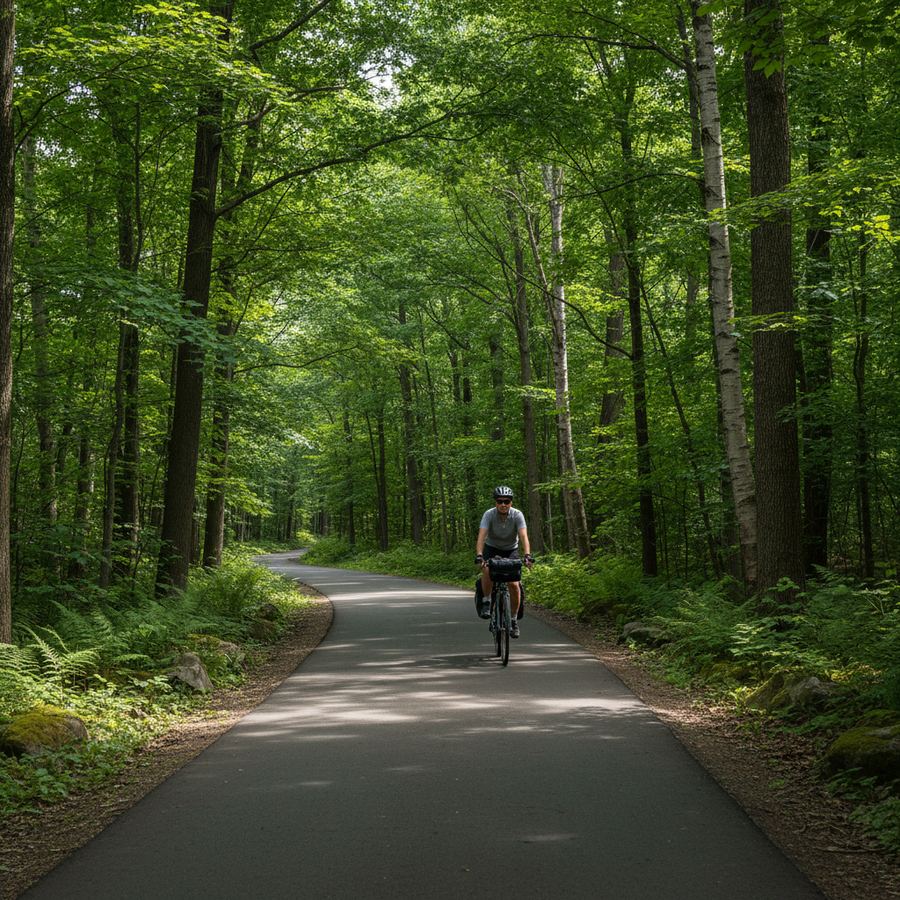
When we talk about bike paths here, we mean paved, multi-use trails that are physically separated from car traffic. Not painted bike lanes on busy roads. Not "sharrows" stenciled onto pavement where you still have dump trucks passing three feet from your elbow. Actual paths, with their own right-of-way, where you can ride without checking over your shoulder every ten seconds.
Ontario has a surprisingly good network of these paths, and it keeps growing. Some run along waterfronts. Others follow old railway corridors that were paved over. A few cut through city parks or connect suburbs to downtown cores. The common thread is smooth asphalt or concrete, enough width for two-way traffic, and separation from motor vehicles.
Why Paved Paths Matter
Surface quality changes everything about a ride. On a smooth paved path, you can ride a road bike, a hybrid, an e-bike, a kids' bike with training wheels, or push a jogging stroller without thinking twice. You don't need fat tires or suspension. You don't need to worry about washouts after a rain, or loose gravel on corners, or mud caking up your drivetrain.
That accessibility is the whole point. Paved paths are the most welcoming type of cycling infrastructure. They work for a retired couple doing a morning loop. They work for a family with a bike trailer. They work for a commuter cutting through a park on the way to work. And they work for experienced riders who want to put in distance without dodging potholes.
The Georgian Trail is a prime example. Thirty-four kilometres of pavement from Collingwood to Meaford, mostly flat, right along Georgian Bay. You can ride it on anything. The surface is forgiving, the views are constant, and you never have to share space with a car. That's what a good bike path looks like.
How Bike Paths Differ from Rail Trails
There's overlap. Some rail trails are paved, and some bike paths follow old railway corridors. But the general distinction is useful. Rail trails tend to be longer, often rural, and frequently surfaced with crushed gravel or limestone screenings. Bike paths are more often paved, sometimes shorter, and typically closer to towns or built along waterfronts.
The practical difference is your tire choice. On a paved bike path, 25mm road tires are fine. On most rail trails, you'll want something wider, 35mm at minimum, and preferably a hybrid or gravel bike. If you're planning a ride and you're not sure about the surface, check our individual route pages for specifics.
What Makes a Good Bike Path
After riding paths across the province, a few things stand out. The best paths share these qualities:
- Smooth, maintained pavement. Cracks, root heaves, and frost damage make a path frustrating fast. The best-maintained paths in Ontario get regular resurfacing. The worst ones haven't been touched since they were built.
- Width. A good path is at least three metres wide. Anything narrower gets awkward when you're passing oncoming cyclists, walkers, and dogs on retractable leashes.
- Sightlines. Blind corners and overgrown vegetation are the biggest safety issues on multi-use paths. Well-designed paths have gentle curves and trimmed sight lines at intersections.
- Road crossings. Every road crossing is a potential conflict point. The best paths minimize crossings or have proper signage, signals, and sight lines where they do cross.
- Amenities nearby. Water, washrooms, and somewhere to get food. You don't need a rest stop every kilometre, but a path that runs 20 km through nowhere with zero services is less useful than one that passes through a couple of towns.
Ontario's Best Paved Paths
We cover individual routes in detail on their own pages, but here's a quick overview of where to find the best paved riding in Ontario.
The Georgian Bay shoreline has some of the best paved paths in the province. The Georgian Trail is the standout, but there's also good riding around Penetanguishene and along the Tay Shore Trail corridor. Further west, Kincardine has a lakeside path that's short but worth the trip.
The Ottawa Valley has been investing heavily in cycling infrastructure. The Ottawa River Pathway is a flagship route, and towns like Petawawa have built out their own local networks.
For a full breakdown of the best paved paths in the province, see our best bike paths in Ontario roundup.
Practical Tips for Path Riding
Paved paths are easy to ride, but a few things will make your experience better:
- Call out your passes. "On your left" is standard. Most walkers and slower riders appreciate the heads-up. Some will still jump into your path, but at least you tried.
- Watch for driveways and intersections. Drivers exiting driveways often don't look for path traffic. Slow down at every crossing, even if you have the right-of-way.
- Bring a bell. It's required by law in Ontario, and it's genuinely more polite than yelling. A quick ring from 20 metres back gives people time to react.
- Check conditions after weather. Spring freeze-thaw cycles can destroy pavement. After a harsh winter, ride cautiously until you know the path has been cleared and inspected.
For more on riding in Ontario, the province's official cycling page covers regulations and safety basics. And if you're new to trail riding, Ontario Trails maintains a database of trails across the province.
Getting Started
If you haven't ridden a paved path before, start short. Pick a trail close to home, ride out for 20 minutes, turn around, and come back. That's a perfectly good first ride. You can always go further next time. Check our easy rides page for routes that are flat, short, and forgiving for new riders.